Edgae Degas
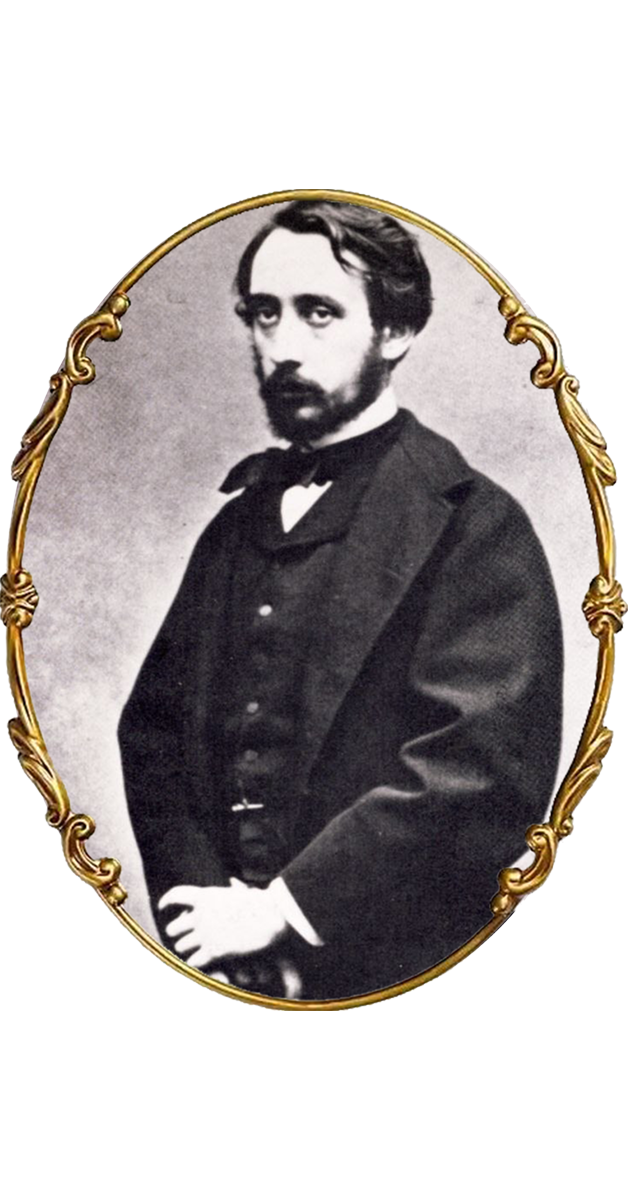
Edgar Degas
One of his more obvious, celebrated features; Edgar Degas was a French artist and sculptor (1834-1917), he became recognized for his highly stylized drawings of ballet dancers; horse races, cafés, and everyday scenes of French people in modern settings. Heavily influenced by Impressionist techniques, Degas described himself as a Realist as he emphasized careful drawing, movement and unconventional composition above the immediacy of outdoors painting. The interest Degas found in movement led him to represent dancers in a more unusual fashion, illustrating not only dancing but stretching, rehearsal, relaxing, backstage life and performance. Degas also utilized cropped perspectives, un-common viewing angles, soft pastels and loosebrush strokes, creating compositions that gave the viewer a feeling of immediate experience.
Key Facts
* Born: 1834
* Paris, France
* Died: 1917
* Paris, France
* Impressionism / Realism
* Ballet dancer's;horses and performers; everyday French figures;
* Oils; Pastels; Charcoal; Drawing; Sculpture
* Composition; unusual perspective; cropped image; movement; strong drawing;
* Major artworks: the ballet class(c. 1871-74); the dance class (c. 1874); l'absinthe (c. 1876); the star (c. 1878); 'little dancer aged fourteen' (c. 1880-1881);
.
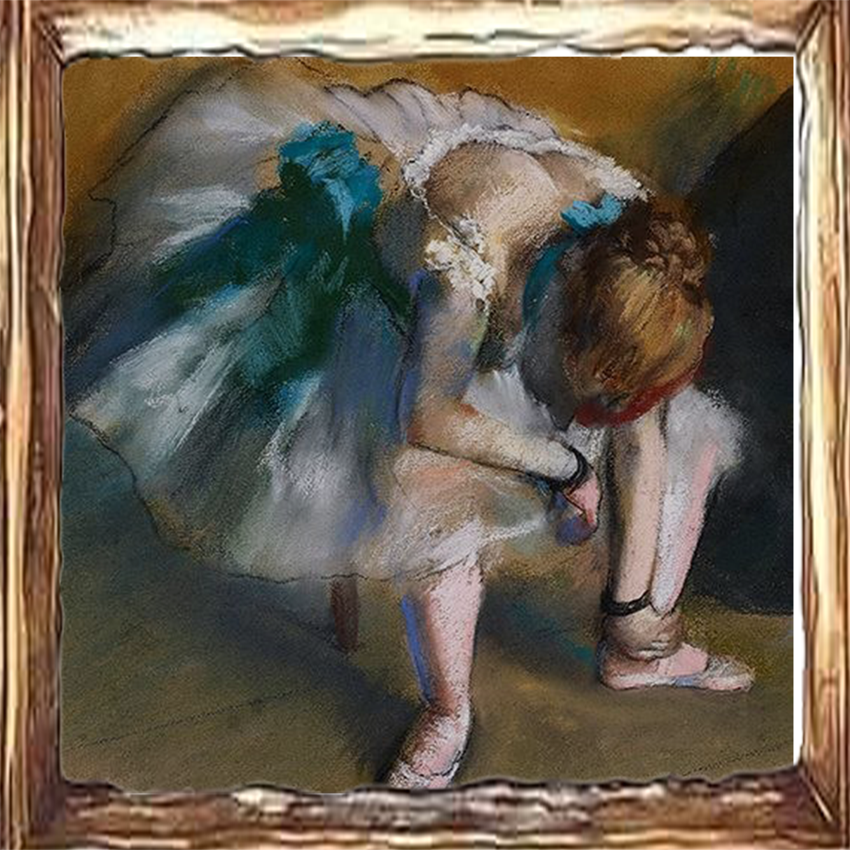
Waiting (c. 1882)
Waiting pastel - two women are seen sitting with one reclining and the other sitting forward. Degas has captured an everyday scene rather than an action-packed one. The unusual composition, including cropped figures and diagonal positions, conveys an impression of suddenness and spontaneity.
The delicate, pastel colours and free execution reveal Degas' pre-occupation with light, atmosphere, posture and casual human activities.
This work exemplifies Degas' interest in contemporary Parisian life and his skill at transforming a simple, seemingly uninteresting, scene into a successful composition.
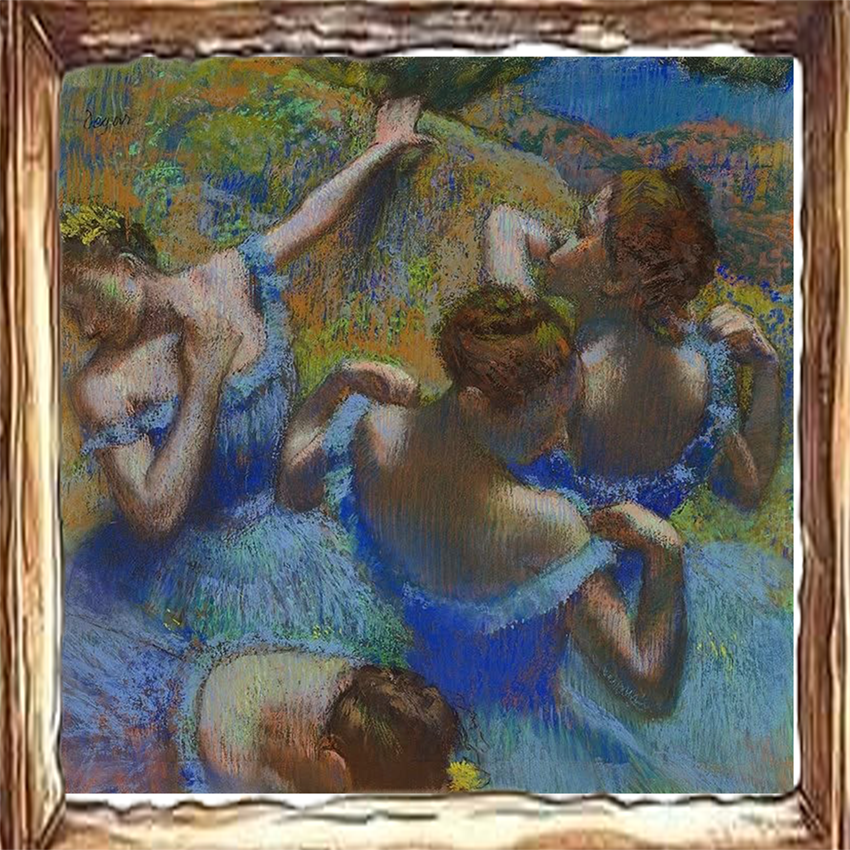
Dancers in Blue
Dancers in Blue This pastel painting features a series of ballet dancers, dressed in bright blue costumes. Degas draws your eye to the refined pose, movement and grace of the dancers, as they prepare for or practice their art, rather than perform. The blue costumes are echoed throughout the work, creating a lively rhythm of colour which moves across the paper, and the energetic sketchy pastel strokes create a sense of spontaneous action. Like much of the artist's ballet-themed work, Degas was obsessed with capturing moments of movement, backstage views and offbeat perspectives.
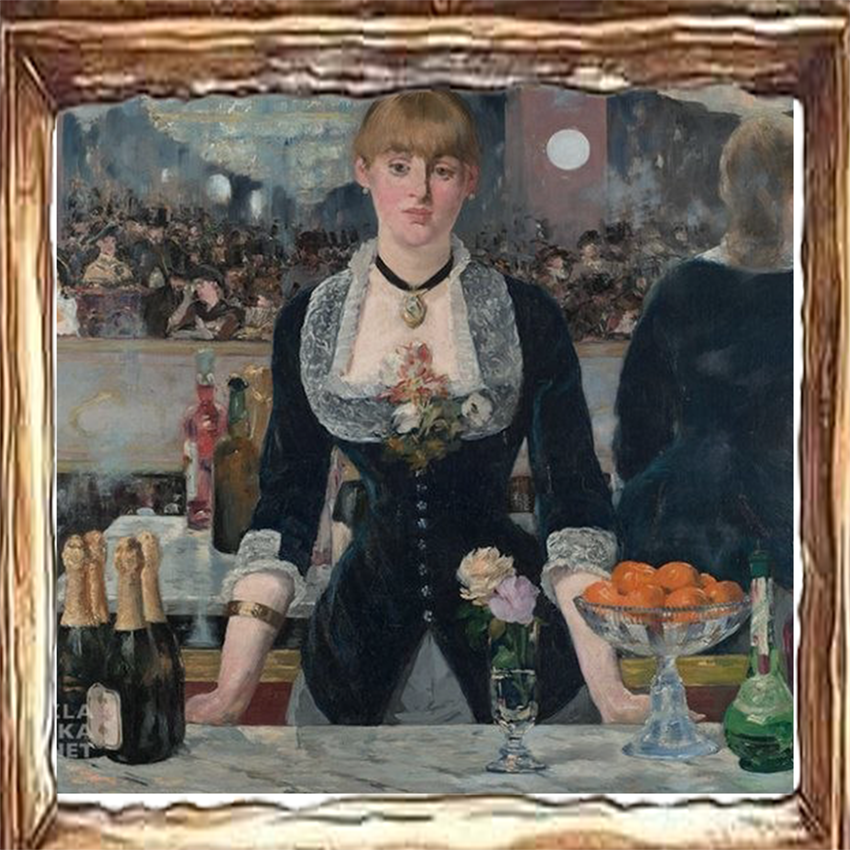
A Bar at the Folies-Bergre (1882)
A Bar at the Folies-Bergre features a young woman working behind a bar in Paris. She stands among bottles, flowers and fruit, and in the mirror behind her you can see the busy nightclub and its customers. Manet uses vibrant colour, stark contrasts and unusual perspectives to portray a lively view of life in Paris. This busy scene reveals the glamour of city life, but by showing the young woman with a distant expression it also reveals how lonely and isolating that life can be.
Pierre-Auguste Renoir
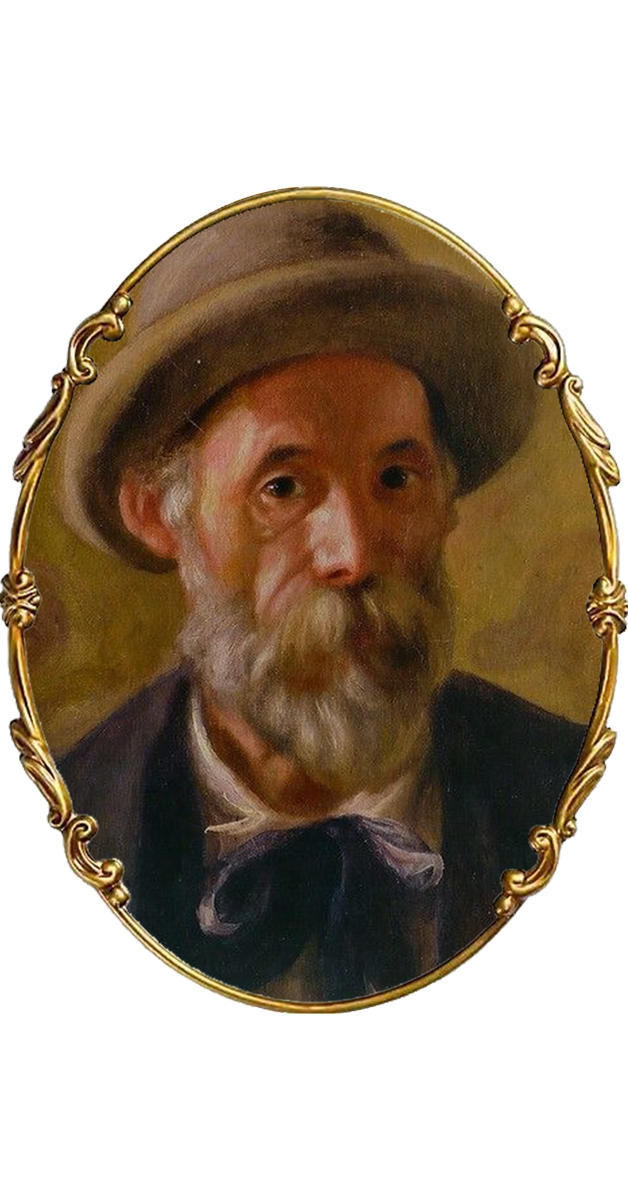
Pierre-Auguste Renoir
One of the most celebrated figures of Impressionism; Pierre-Auguste Renoir was a French painter (1841–1919), best known for his colourful and lively paintings of people, social gatherings, portraits, landscapes, and scenes of everyday life. He became recognized for his soft use of light, bright colours and loose brushwork, often capturing the beauty and joy of modern French life. Strongly associated with the Impressionist movement, Renoir focused on the effects of light and atmosphere while giving his paintings a warm, lively and almost glowing quality. His interest in people led him to paint dancers, children, couples, friends and fashionable Parisian society, often showing them enjoying relaxed social occasions. Renoir used vibrant colour, delicate brushstrokes and natural-looking compositions to create scenes that feel spontaneous, cheerful and full of movement.
Key Facts
* Born: 1841
* Limoges, France
* Died: 1919
* Cagnes-sur-Mer, France
* Impressionism
-
People; portraits; social gatherings; children; landscapes; everyday French life
-
Oils; Pastels; Drawing
-
Bright colours; soft light; loose brushwork; movement; warmth; atmosphere; lively compositions
-
Major artworks: La Grenouillère (1869); Dance at Le Moulin de la Galette (1876); The Luncheon of the Boating Party (1880–81); The Bathers (1887); Dance in the Country (1883)
.
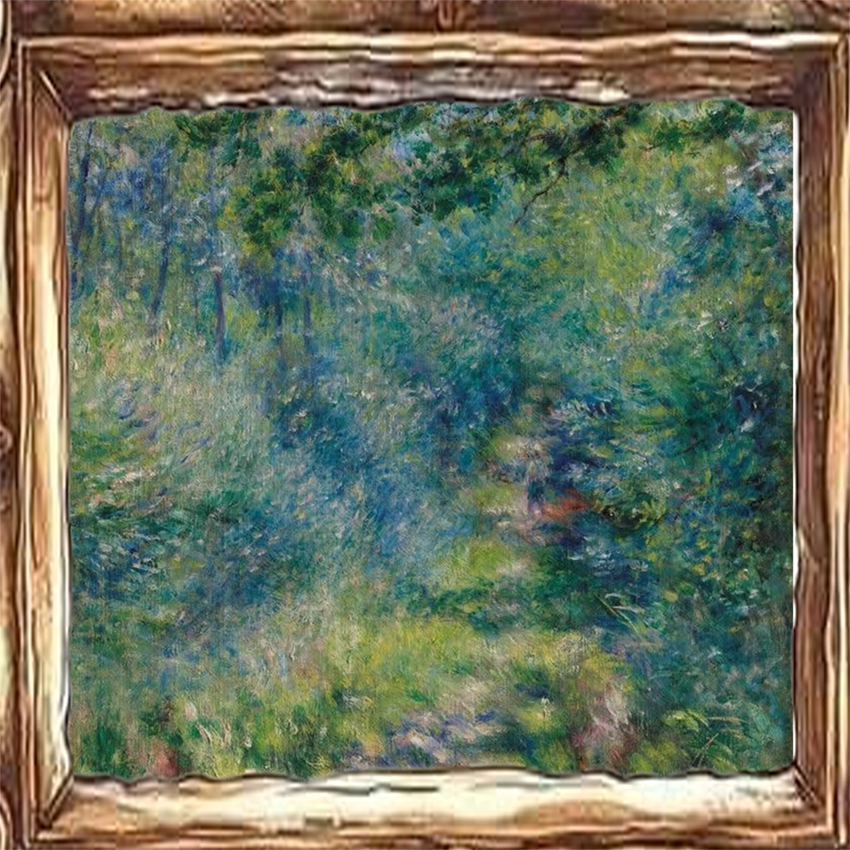
Pietre Auguste Renoir - Path in the Forest (Sentier dans le bois)
Path in the Forest is a tranquil picture of a lush forest with an inviting dirt path leading to it. Renoir applies loose, colourful brushstrokes, and the portrayal of dappled light reflects his interest in capturing the transient effects of light and atmosphere. Because of his interest in capturing natural scenes, outdoors and in the presence of light, Renoir was closely related to the Impressionist movement.
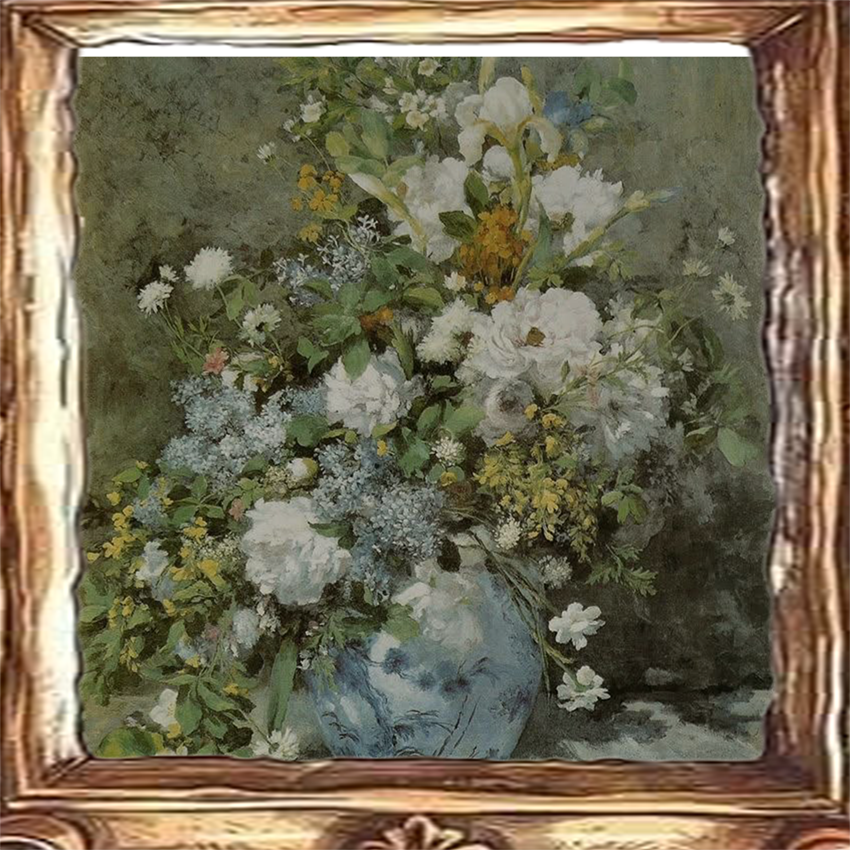
Pierre-Auguste Renoir - Bouquet de printemps (Spring Bouquet)
Bouquet de printemps is a vibrant still-life featuring a complete bouquet of spring flowers. Renoir uses bold colours and loose, soft brushstrokes to convey the freshness and vitality of a full spring bouquet. The flowers are arranged naturally, in an informal style, rather than in a traditional, symmetrical way. The painting showcases Renoir's interest in colour, light and texture.
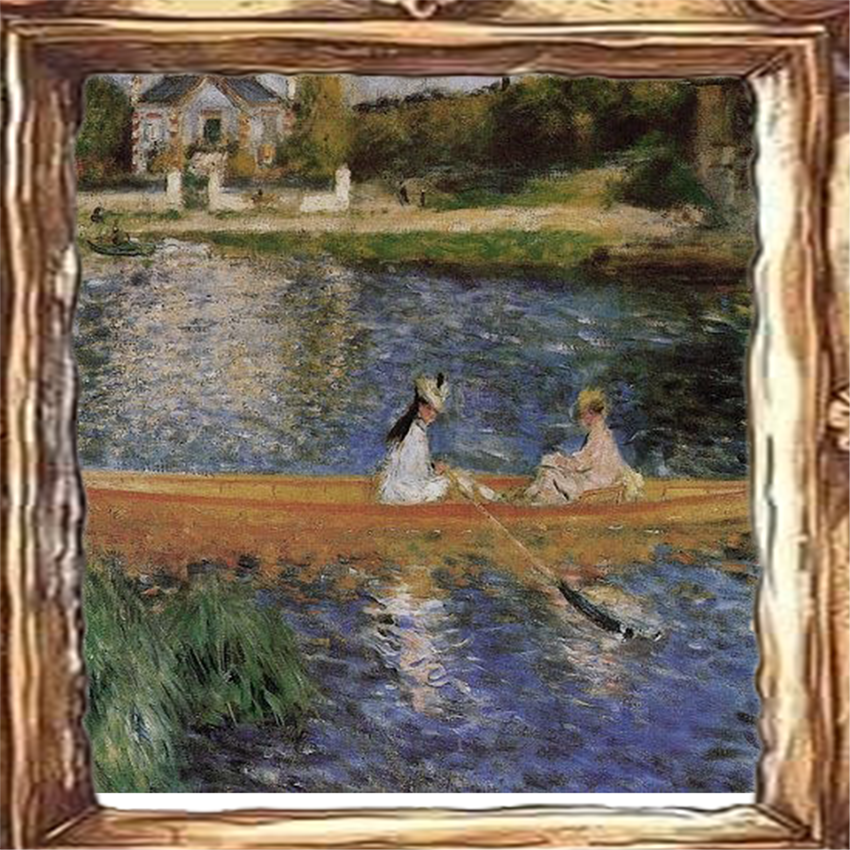
Pierre-Auguste Renoir - The Skiff (1875)
The Skiff depicts two women relaxing and sailing on a boat on the water. Renoir has used bright colours, loose brushstrokes and sparkling reflections to show the sunlight and a water surface. The unconventional perspective and lively composition give the work a spontaneous, natural feel. The painting highlights Renoir's Impressionist preoccupations with leisure, open air, light and fleeting moments.