
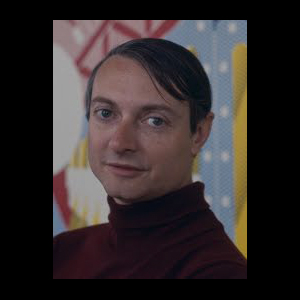
Roy Licthenstein
Roy Lichtenstein was an American Pop Art artist best known for turning comic book and advertising images into large, bold paintings. He used bright primary colours, thick black outlines, and his signature Ben-Day dots to copy the look of printed comics on a much larger scale. His work often shows dramatic emotional scenes like romance, sadness, or action, but in a stylised and exaggerated way. Through this, he explored how mass media shapes the way we see emotions and stories. Lichtenstein became one of the most important Pop Art artists of the 1960s and helped change the idea of what art could be by blending popular culture with fine art.
Happy Tears
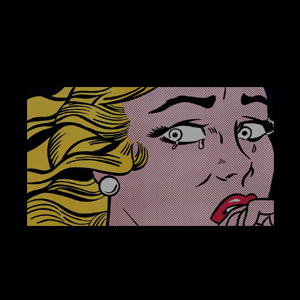
In Happy Tears, a woman is shown crying, but her expression suggests a mix of emotions rather than pure sadness. The tears could represent relief, joy, or the overwhelming feeling of a romantic situation. Roy Lichtenstein uses bold lines and comic-style dots to exaggerate her emotions, making the moment feel dramatic yet distant, like a scene from a comic strip.
Modern Art Poster
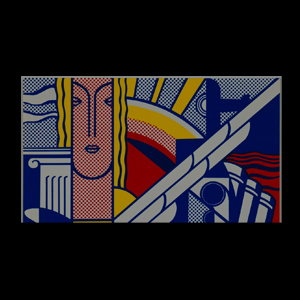
Modern Art Poster focuses on bold graphic elements rather than a clear narrative. The use of bright colours, shapes, and strong composition reflects the influence of modern design and advertising. The artwork celebrates visual impact and style, showing how art can communicate through form rather than story.
Girl with Tear I
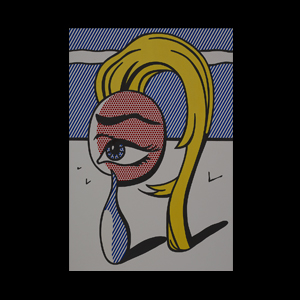
In Girl with Tear I, a close-up of a woman reveals a single tear running down her face. Her expression shows vulnerability and sadness, suggesting heartbreak or emotional pain. The simplicity of the image makes the emotion more intense, as the viewer is drawn directly to her face and the dramatic tear.

Sleeping Girl
In Sleeping Girl, a woman lies peacefully with her eyes closed, creating a calm and quiet mood. Unlike the emotional intensity seen in other works, this piece suggests rest, escape, or emotional withdrawal. The stillness of the figure contrasts with the dramatic themes often explored in his art.

POP Exclamation
POP Exclamation focuses on a bold, comic-style burst or speech bubble that represents excitement or surprise. The artwork removes detailed storytelling and instead highlights the visual language of comics. Through bright colours and strong shapes, it captures the fast-paced, energetic feeling of pop culture and mass media.
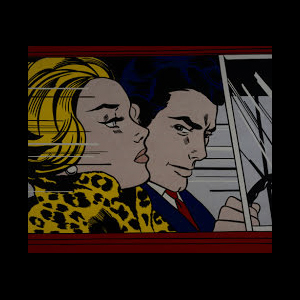
In the Car
In the Car shows a couple sitting together, but there is a sense of emotional tension between them. The woman looks worried and deep in thought, while the man appears calm and focused on driving. This contrast suggests a possible conflict or unspoken issue in their relationship, capturing a quiet but powerful moment of disconnection.

Happy Tears
In Happy Tears, a woman is shown crying, but her expression suggests a mix of emotions rather than pure sadness. The tears could represent relief, joy, or the overwhelming feeling of a romantic situation. Roy Lichtenstein uses bold lines and comic-style dots to exaggerate her emotions, making the moment feel dramatic yet distant, like a scene from a comic strip.
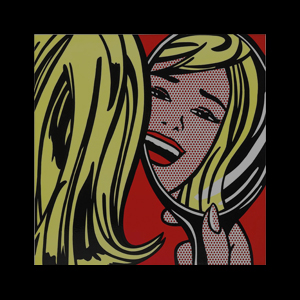
Girl in Mirror
Girl in Mirror shows a woman looking at her reflection, suggesting themes of identity and self-perception. She appears thoughtful, possibly questioning her appearance or emotions. The mirror creates a sense of introspection, making the artwork feel more personal and psychological.
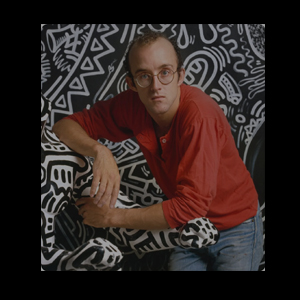
Keith Haring
Keith Haring was an American Pop Art and street artist known for his bold, energetic line drawings and simple, iconic figures. He first gained attention in the 1980s by drawing chalk artworks in New York subway stations, making art accessible to everyday people. His style uses thick outlines, bright colours, and repeating symbols like dancing figures, barking dogs, and radiant babies. Haring’s work often carried social messages about love, unity, drug awareness, and AIDS activism, reflecting his belief that art should be for everyone and speak about important social issues.
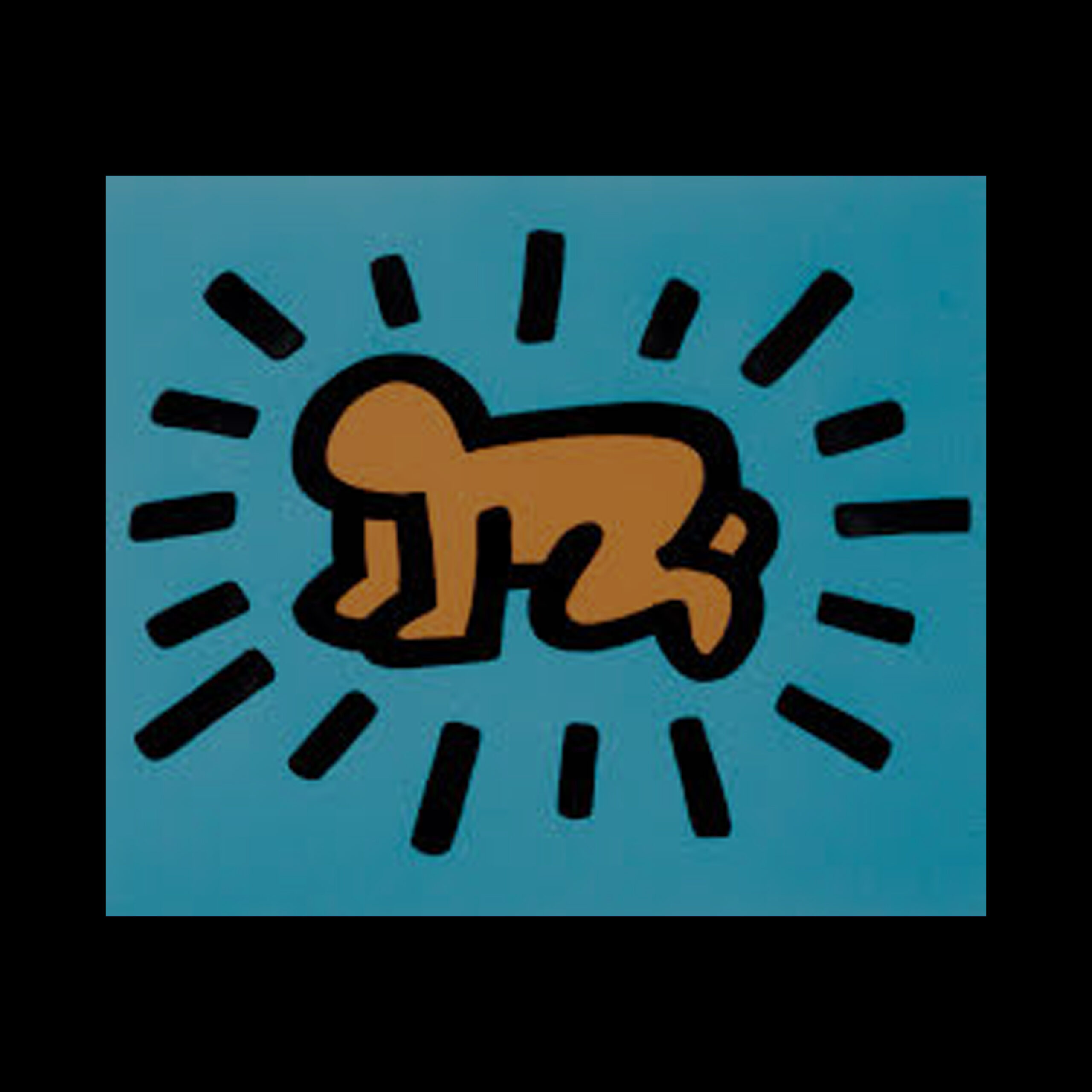
Radiant Baby
The Radiant Baby is one of Haring’s most famous symbols, showing a crawling baby surrounded by glowing lines. It represents innocence, purity, and new life. It became a recurring icon in his work, often symbolising hope and positivity.
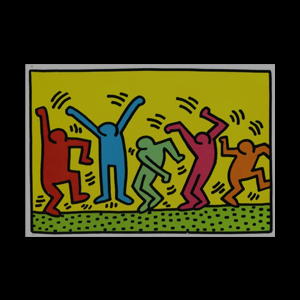
Untitled (Dance)
This artwork shows two stylised figures moving energetically together, suggesting rhythm, joy, and freedom. Haring’s bold lines and simple forms capture the feeling of dance as a universal language. It reflects celebration, movement, and unity through physical expression.
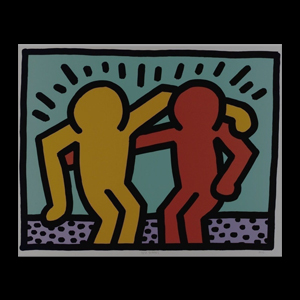
Best Buddies
This piece shows two figures closely connected, symbolising friendship and loyalty. The simple shapes and strong outlines emphasise emotional connection over detail. It reflects Haring’s focus on human relationships and unity.

Mother and Baby
Mother and Baby depicts a simple but powerful bond between parent and child. The figures are shown in Haring’s signature expressive style, emphasising care and connection. It highlights themes of love, protection, and family.
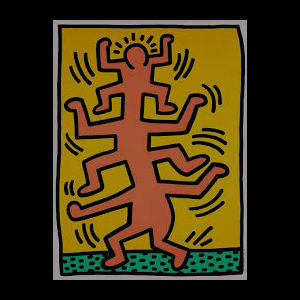
Growing #1
This artwork shows figures evolving and expanding, symbolising growth and transformation. The repeated shapes suggest development over time, both physically and emotionally. It reflects ideas of life cycles and personal change.
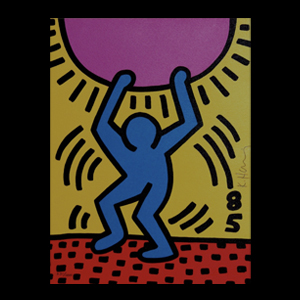
International Youth Year
Created for the United Nations’ International Youth Year, this artwork celebrates young people around the world. It shows interconnected figures representing unity, energy, and global connection. The piece promotes equality and the importance of youth voices.

Pop Shop I (Plate 1)
Pop Shop I is part of Haring’s series that brought his art into everyday consumer culture. It features his signature figures and symbols in a playful, commercial style. The work reflects his belief that art should be accessible to everyone, not just galleries.
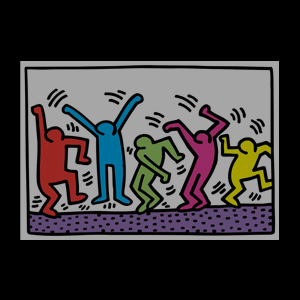
Dancing Boys
Dancing Boys features energetic figures in motion, celebrating joy and freedom. The repeating poses create a sense of rhythm and movement. It represents youth, fun, and the expressive power of dance.